
Mastering the Tetris of the Terminal: 4D Cartonization in Yard Management
Picture a major port terminal. To an outsider, it’s a marvel of global trade. To a terminal operator, it’s a high-stakes, heavy-metal game of Tetris. With mega-ships routinely dumping 10,000+ TEUs onto finite port real estate in a single call, the pressure to keep the yard fluid is relentless.
A container yard isn't a parking lot—it's a living, breathing ecosystem. If your Terminal Operating System (TOS) treats the yard like static storage, you are accidentally building physical blockades that choke your own throughput. Because let's face it: the most perfectly stacked, beautifully organized column of containers is completely useless if the one box you need right now is pinned at the bottom.
The Trap of 3D Geometry
For decades, yard management relied heavily on 3D spatial planning. Traditional algorithms were designed to solve the physical constraints of the yard. It's the classic geometry problem:
- Footprint and Height: Fitting the exact dimensions (20ft vs. 40ft vs. 45ft) into the block without exceeding crane height or wind-load limits.
- Weight Distribution: Grounding the heavy boxes at the bottom and stacking the lighter ones on top to prevent structural collapses.
- Category Segregation: Plugging reefers into power racks and keeping hazardous materials in strict compliance zones.
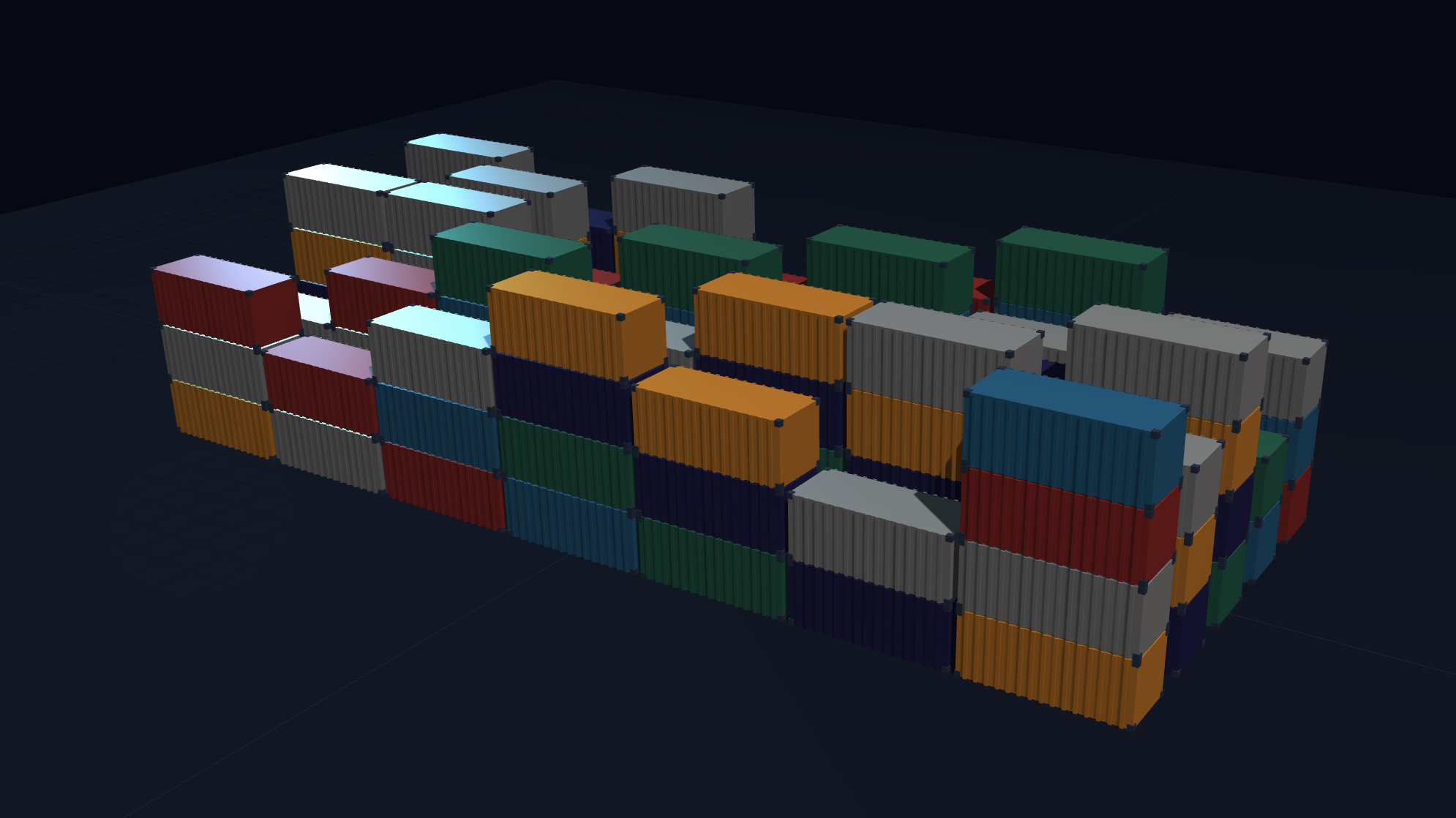
These 3D systems are great at keeping a stack from toppling over. But a yard optimized solely for space inevitably creates a logistical nightmare for retrieval. You get incredibly dense stacks, but you sacrifice your operational speed entirely.
Enter 4D Cartonization: The Temporal Dimension
The fourth dimension of yard management isn't a mystery—it's time. 4D cartonization injects predictive chronological sequencing directly into your spatial math.
Let's talk about the dreaded "dead dig." A reach stacker places a 40-foot container perfectly into a 3D-optimized stack. But here is the catch: the truck picking up that specific container arrives in exactly two hours, and the three containers stacked on top of it aren't leaving until tomorrow.
When that truck hits the gate, the yard crane has to perform three dead digs—unproductive, chaotic shuffles, moving the top containers out of the way just to rescue the target container. Dead digs murder efficiency. They burn diesel, wear out multi-million dollar equipment, and cause miles of backed-up trucks at the terminal gate.
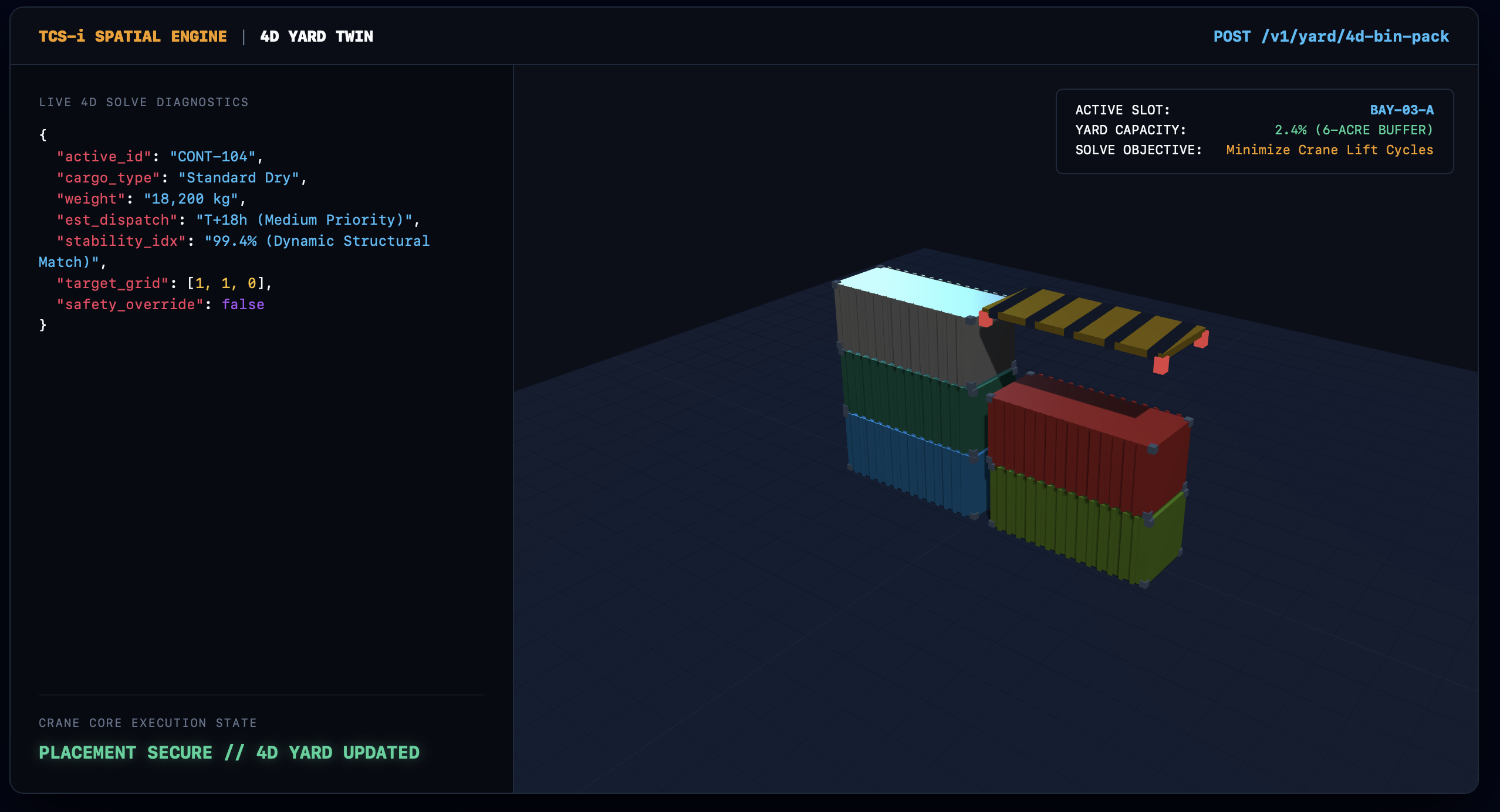
4D cartonization kills the dead dig. By ingesting live API feeds from EDI manifests, Vessel ETAs, and Truck Appointment Systems, the engine calculates a dynamic "time-to-live" score for every container as it arrives. The golden rule? Containers leaving sooner are never buried beneath containers leaving later. It solves for spatial density and chronological retrieval at the exact same time.
Equipment Orchestration: Stop the Zigzagging
When your spatial planning is married to temporal scheduling, the entire ballet of your yard machinery transforms. Every move made by an RTG, RMG, or straddle carrier costs money.
A true 4D system doesn't just assign a slot; it calculates the "cost of the move." If a truck arrives, the engine evaluates the physical location of all active cranes. It won't dispatch a crane from block A to block F if a reach stacker in block E can intercept the job with zero dead-heading. You stop your equipment from zigzagging like lost tourists and start maximizing productive moves per hour.
The Ghost Shift Advantage: Predictive Housekeeping
The smartest 4D engines don't sleep when the gate traffic slows down. During the quiet graveyard shifts, the algorithm looks ahead to the morning rush.
It identifies containers that are scheduled for early drayage pickup but happen to be buried deep in the yard. The system automatically generates "housekeeping" tasks. Your night crew (or automated stacking cranes) unburies these high-priority boxes and pre-stages them in rapid-transfer zones. When the morning wave of trucks arrives, the yard is primed and ready. Cranes drop containers onto chassis in a seamless, sequential flow. No scrambling. No reactive digging.
The Bottom Line
You aren't just managing steel boxes; you are managing the precise intersection of space and time.
Terminals stuck on legacy 3D logic are forced to buy more land or more cranes just to survive peak volume. By integrating 4D cartonization, port operators can drastically reduce Truck Turn Times (TTT), slash fuel waste, and squeeze massive hidden capacity out of their existing physical footprint.
Ready to stop playing 3D Tetris?
Discover how our 4D algorithms can eliminate dead digs, orchestrate your equipment, and unlock hidden throughput capacity in your terminal yard.